
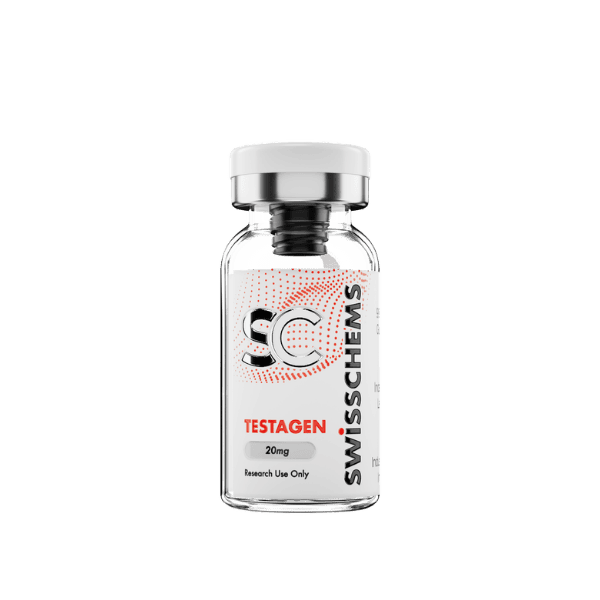
Testagen, 20mg
$59.95
Testagen is a short peptide bioregulator belonging to the Khavinson peptide class. It is investigated for its proposed interactions with chromatin-associated regulatory systems, transcription-associated processes, and peptide-mediated molecular signaling pathways. Experimental studies have examined its activity in… CAS: 77614-16-5 | Formula: C17H29N5O9 | Content: 20 mg per vial | Research use only | Third-party lab tested.
Buy Testagen, 20mg – Swiss Chems USA
Testagen, 20mg — Research Overview
Testagen is a short peptide bioregulator belonging to the Khavinson peptide class. It is investigated for its proposed interactions with chromatin-associated regulatory systems, transcription-associated processes, and peptide-mediated molecular signaling pathways. Experimental studies have examined its activity in peptide–DNA interaction models, chromatin-binding investigations, regulatory signaling mechanisms, and molecular pathways involved in transcriptional modulation. Its short-peptide structure makes it a valuable research tool for studies of peptide bioregulator pharmacology, chromatin-associated mechanisms, molecular signaling networks, transcription-related processes, and comparative investigations of regulatory peptide compounds.
- High Purity – 99% Purity Guaranteed
- Independently Lab Tested
- Research Grade Quality
- For Laboratory Research Use Only
Intended use: This material is supplied for laboratory and in-vitro research only. It is not a drug, food, or cosmetic and is not intended for human or animal consumption.
Testagen, 20mg Chemical Properties
| Property | Specification |
|---|---|
| Chemical Formula | C17H29N5O9 |
| Synonyms | Testagen bioregulator, testis-derived peptide bioregulator |
| Molar Mass | ~432 g/mol (estimated) |
| CAS Number | 77614-16-5 |
| Pubchem CID | 44568787 |
| Total Compound Content | 20 mg per vial |
| Shelf Life | 36 months |
Testagen, 20mg Research Applications
Testagen is a short peptide bioregulator containing the tetrapeptide sequence Lys-Glu-Asp-Gly (KEDG). It is investigated for its proposed interactions with chromatin-associated regulatory systems, transcription-associated processes, and peptide-mediated molecular signaling pathways. Experimental studies have examined its activity in peptide–DNA interaction models, chromatin-binding investigations, regulatory signaling mechanisms, and molecular pathways involved in transcriptional modulation. Proposed molecular activities include interactions with chromatin-associated protein complexes and modulation of transcription-associated processes through peptide-mediated regulatory mechanisms. Its short-peptide structure makes it a valuable research tool for studies of peptide bioregulator pharmacology, chromatin-associated mechanisms, molecular signaling networks, transcriptional regulation, and comparative investigations of regulatory peptide compounds. Independently third-party HPLC-tested; COA available per batch.
Testagen, 20mg Frequently Asked Questions
What molecular pathways has Testagen been investigated in?
Experimental studies have examined Testagen’s activity in chromatin-associated regulatory systems, transcription-associated processes, peptide–DNA interaction models, and molecular signaling pathways. Proposed mechanisms involve modulation of transcriptional accessibility through interactions with chromatin-associated complexes, resulting in changes in downstream gene expression patterns. These investigations have positioned Testagen as a research tool for studying peptide-mediated regulation of transcriptional and signaling processes.
How does Testagen’s proposed mechanism differ from receptor-mediated signaling pathways?
Receptor-mediated signaling pathways typically involve ligand binding to a membrane or intracellular receptor, followed by activation of downstream signaling cascades and secondary messenger systems. Testagen’s proposed mechanism has been described as a direct interaction with chromatin-associated regulatory structures and transcription-related processes rather than activation of a specific receptor pathway. This distinction makes it relevant to studies investigating peptide-mediated transcriptional regulation, chromatin dynamics, and molecular regulatory mechanisms independent of classical receptor signaling.
What is the current evidence base for Testagen’s molecular activity?
A: Published investigations have reported effects on transcription-associated pathways, chromatin-interaction models, peptide-mediated regulatory mechanisms, and molecular signaling networks. These findings have contributed to ongoing research into short peptide bioregulator pharmacology and the proposed role of regulatory peptides in modulating molecular processes. As with other compounds in this class, further mechanistic investigation and independent validation remain important areas of continued research.
Research Use Disclaimer
All product information is provided for educational and laboratory research reference only. Any form of introduction into humans or animals is prohibited. Handle only in licensed research settings in accordance with applicable laws and institutional protocols.
Related products
Reviews
There are no reviews yet.