
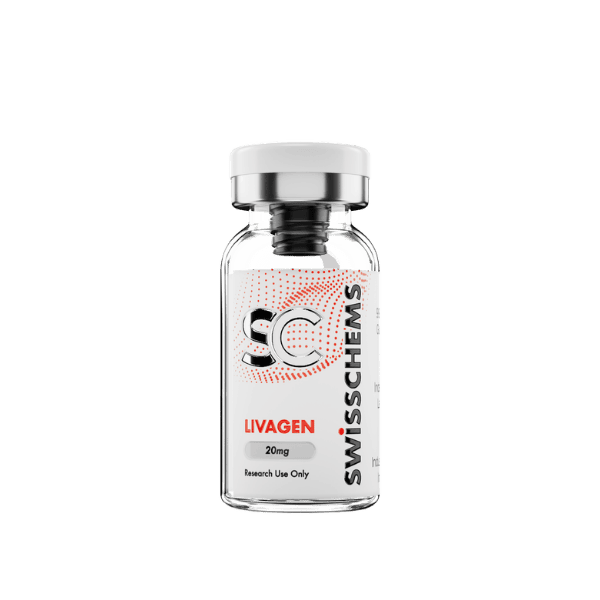
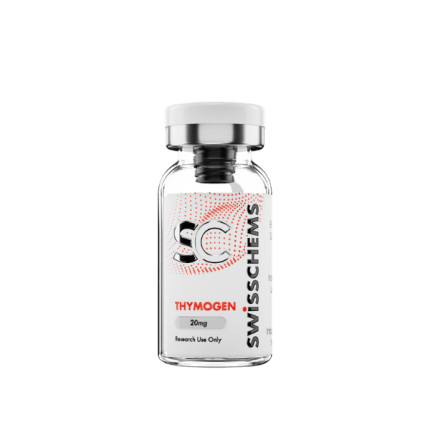
Livagen, 20mg
$62.95
Livagen is a synthetic bioregulatory peptide being studied for its role in regulating DNA structure and gene expression. Research interest centers on its proposed capacity to promote chromatin decondensation, with effects most extensively studied in lymphocyte models alongside investigations into immune system… CAS: 195875-84-4 | Formula: C18H31N5O9 | Content: 20mg per vial | Research use only | Third-party lab tested.
Buy Livagen, 20mg – Swiss Chems USA
Livagen, 20mg — Research Overview
Livagen is a synthetic bioregulatory peptide being studied for its role in regulating DNA structure and gene expression. Research interest centers on its proposed capacity to promote chromatin decondensation, with effects most extensively studied in lymphocyte models alongside investigations into immune system modulation across cardiac, gastrointestinal, and neural tissue models. Research applications include chromatin structure research, immune signalling pathway studies, and nociceptive pathway investigation.
- High Purity – 99% Purity Guaranteed
- Independently Lab Tested
- Research Grade Quality
- For Laboratory Research Use Only
Intended use: This material is supplied for laboratory and in-vitro research only. It is not a drug, food, or cosmetic and is not intended for human or animal consumption.
Livagen, 20mg Chemical Properties
| Property | Specification |
|---|---|
| Chemical Formula | C18H31N5O9 |
| Synonyms | SCHEMBL5967826 |
| Molar Mass | 461.5 g/mol |
| CAS Number | 195875-84-4 |
| PubChem CID | 87919683 |
| Total Compound Content | 20mg per vial |
| Shelf Life | 36 months |
Livagen, 20mg Research Applications
Livagen is studied for its proposed role in promoting chromatin decondensation, a mechanism that may enhance accessibility and expression of genes associated with cellular homeostasis. Its effects have been most extensively characterised in lymphocyte cell models, with additional investigations examining immune system modulation and signalling across cardiac, gastrointestinal, and neural tissue model systems. Additional research has examined Livagen’s influence on nociceptive signalling pathways, positioning it within bioregulatory peptide research spanning chromatin biology, immune regulation, and pain pathway investigation. Independently third-party HPLC-tested; COA available per batch.
Livagen, 20mg Frequently Asked Questions
What methods are used to study Livagen’s proposed effect on chromatin decondensation in lymphocyte models?
Chromatin accessibility assays (such as ATAC-seq or micrococcal nuclease digestion-based methods) and microscopy-based heterochromatin/euchromatin ratio quantification are standard approaches for studying Livagen’s reported effects on chromatin structure in lymphocyte cell models. These methods allow researchers to compare chromatin organisation state before and after compound exposure, often paired with downstream gene expression analysis (RNA-seq or targeted qPCR) to connect any observed chromatin structural change to functional transcriptional outcomes.
How is Livagen’s immune modulation studied across different tissue model systems?
Tissue-specific immune signalling research with Livagen typically uses isolated immune cell populations relevant to each tissue context — cardiac-resident immune cells, gut-associated lymphoid tissue cells, and neural-immune interface cell populations (such as microglia) — measuring cytokine profiles and immune cell activation markers following compound exposure in each tissue-specific model. Comparative analysis across these tissue contexts allows researchers to determine whether Livagen’s immune-modulatory mechanism is tissue-general or exhibits tissue-specific variation.
What experimental approaches investigate Livagen’s reported influence on nociceptive signaling pathways?
Rodent behavioral nociception models (such as von Frey filament mechanical sensitivity testing or thermal withdrawal latency assays) combined with molecular analysis of pain-signalling pathway components (such as TRPV1 channel expression or neuroinflammatory markers in dorsal root ganglia) are used to study Livagen’s relevance to nociceptive pathway research. These combined behavioral and molecular endpoints allow researchers to connect any functional change in pain-related behavior to underlying signalling pathway modulation.
Research Use Disclaimer
All product information is provided for educational and laboratory research reference only. Any form of introduction into humans or animals is prohibited. Handle only in licensed research settings in accordance with applicable laws and institutional protocols.
Related products
Reviews
There are no reviews yet.