
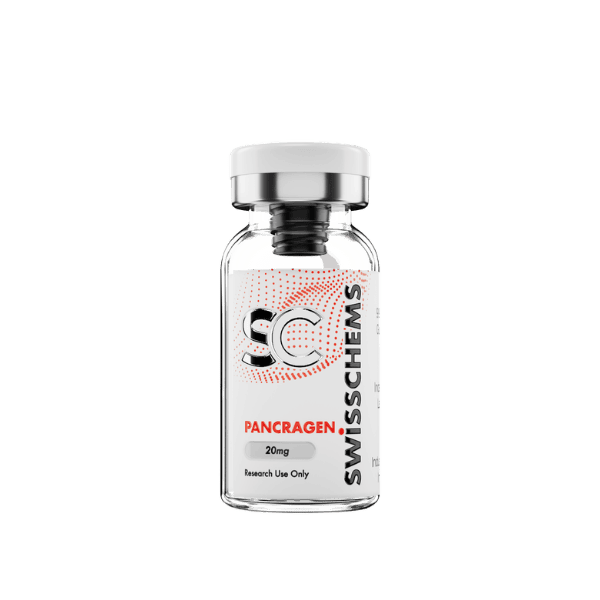

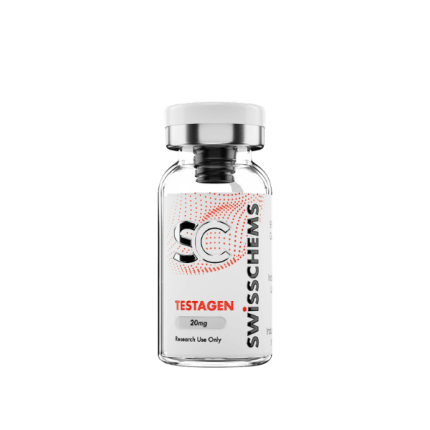
Pancragen, 20mg
Original price was: $65.00.$59.95Current price is: $59.95.
Pancragen is a synthetic tetrapeptide bioregulator studied for its activity in pancreatic tissue models. Research interest centers on its proposed influence on endocrine signalling pathways, including those related to glucose metabolism and melatonin regulation. Research applications include pancreatic endocrine… Formula: C26H36N6O9 | Content: 20mg per vial | Research use only | Third-party lab tested.
Buy Pancragen, 20mg – Swiss Chems USA
Pancragen, 20mg — Research Overview
Pancragen is a synthetic tetrapeptide bioregulator studied for its activity in pancreatic tissue models. Research interest centers on its proposed influence on endocrine signalling pathways, including those related to glucose metabolism and melatonin regulation. Research applications include pancreatic endocrine pathway studies, glucose metabolism research, and comparative bioregulatory tetrapeptide pharmacology.
- High Purity – 99% Purity Guaranteed
- Independently Lab Tested
- Research Grade Quality
- For Laboratory Research Use Only
Intended use: This material is supplied for laboratory and in-vitro research only. It is not a drug, food, or cosmetic and is not intended for human or animal consumption.
Pancragen, 20mg Chemical Properties
| Property | Specification |
|---|---|
| Chemical Formula | C26H36N6O9 |
| Synonyms | SCHEMBL5491754 |
| Molar Mass | 576.25 g/mol |
| PubChem CID | 73356311 |
| Total Compound Content | 20mg per vial |
| Shelf Life | 36 months |
Pancragen, 20mg Frequently Asked Questions
What pancreatic islet cell models are used to study Pancragen’s effects on glucose metabolism pathways
Isolated pancreatic islet cell cultures and beta-cell-derived cell lines are standard models for studying Pancragen’s effects on glucose-stimulated insulin secretion, typically measuring insulin release in response to standard glucose challenge with and without Pancragen pre-treatment or co-treatment. Rodent models of induced diabetes (such as streptozotocin-induced models) provide a complementary in vivo system for studying Pancragen’s effects on blood glucose regulation and pancreatic tissue endpoints within an intact metabolic system.
How is Pancragen’s proposed effect on pancreatic differentiation transcription factors investigated?
Pancreatic progenitor or islet cell models are used to measure expression of key differentiation transcription factors (such as Ptf1a, Pdx1, Pax6, Foxa2, Nkx2.2, and Pax4) by qPCR or immunostaining following Pancragen exposure, allowing researchers to characterise whether the peptide influences the transcriptional program governing pancreatic cell maturation and identity. These molecular endpoints are often paired with functional assays (such as insulin secretion capacity) to connect transcriptional changes to downstream functional outcomes.
What aging-related metabolic models are used to study Pancragen’s relevance to age-associated endocrine changes?
Aged rodent models, sometimes studied across multiple age cohorts, are used to examine Pancragen’s effects on metabolic biomarkers associated with aging, including measures of cellular senescence and stress-response markers alongside standard metabolic endpoints (blood glucose, insulin sensitivity indices). Comparative analysis across young versus aged model cohorts allows researchers to determine whether Pancragen’s effects on these endpoints are age-dependent, which is relevant to broader bioregulatory peptide research examining age-related applications across multiple organ systems.
Research Use Disclaimer
All product information is provided for educational and laboratory research reference only. Any form of introduction into humans or animals is prohibited. Handle only in licensed research settings in accordance with applicable laws and institutional protocols.
Related products
Reviews
There are no reviews yet.