
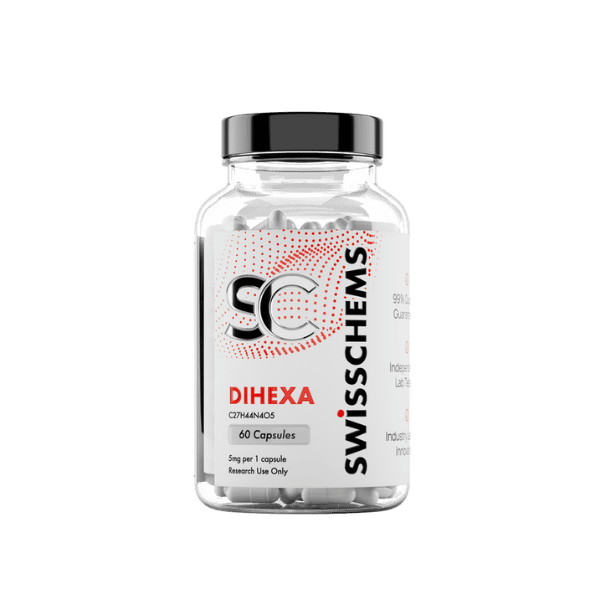
Dihexa (5mg/capsule), 60 Capsules
$69.99
Dihexa (PNB-0408) is a synthetic compound derived from angiotensin IV, studied for its proposed interactions with hepatocyte growth factor (HGF) signalling and MET receptor pathway modulation in experimental models. Research interest centers on the compound’s proposed capacity to potentiate HGF activity at the MET… CAS: 1401708-83-5 | Formula: C27H44N4O5 | Content: 300mg (5mg per capsule) | Research use only | Third-party lab tested.
Buy Dihexa (5mg/capsule), 60 Capsules – Swiss Chems USA
Dihexa (5mg/capsule), 60 Capsules — Research Overview
Dihexa (PNB-0408) is a synthetic compound derived from angiotensin IV, studied for its proposed interactions with hepatocyte growth factor (HGF) signalling and MET receptor pathway modulation in experimental models. Research interest centers on the compound’s proposed capacity to potentiate HGF activity at the MET receptor, with particular attention to downstream effects on synaptic density and cognitive function-related signalling in neurological research models. The capsule format provides a convenient, pre-measured delivery vehicle for oral administration research protocols. Research applications include HGF/MET receptor pathway studies, synaptic signalling research, and comparative angiotensin analogue pharmacology.
Also available as Dihexa powder, 500mg. Other compounds in our Nootropics range: Noopept (Omberacetam) at 30mg/capsule and Semax 30mg.
- High Purity – 99% Purity Guaranteed
- Independently Lab Tested
- Research Grade Quality
- For Laboratory Research Use Only
Intended use: This material is supplied for laboratory and in-vitro research only. It is not a drug, food, or cosmetic and is not intended for human or animal consumption.
Dihexa (5mg/capsule), 60 Capsules Chemical Properties
| Property | Specification |
|---|---|
| Chemical Formula | C27H44N4O5 |
| Synonyms | PNB-0408, N-hexanoic-Tyr-Ile-(6) aminohexanoic amide, Dihexa (PNB-0408) |
| Molar Mass | 508.66 g/mol |
| CAS Number | 1401708-83-5 |
| PubChem CID | 129010512 |
| Total Compound Content | 300mg (5mg per capsule) |
| Shelf Life | 36 months |
Dihexa (5mg/capsule), 60 Capsules Research Applications
Dihexa is a synthetic peptide analogue derived from the angiotensin IV sequence, studied in laboratory research models for its proposed capacity to potentiate hepatocyte growth factor (HGF) activity at the MET receptor tyrosine kinase. Research has examined its proposed downstream effects on synaptic plasticity-related signalling markers — including dendritic spine density measurements in hippocampal neuron models — and its proposed relevance to cognitive function research paradigms in rodent behavioural models. As a small-molecule peptide analogue with proposed blood-brain barrier permeability, Dihexa is studied within comparative angiotensin analogue pharmacology research examining how modifications to the parent sequence influence receptor potentiation potency and CNS tissue penetration. Independently third-party HPLC-tested; COA available per batch.
Dihexa (5mg/capsule), 60 Capsules Lab Results & Certificates of Analysis
Third-party analytical reports associated with this research compound:
Dihexa (5mg/capsule), 60 Capsules Frequently Asked Questions
What is Dihexa’s proposed mechanism of action at the HGF/MET receptor pathway?
Dihexa is studied for its proposed capacity to function as a potentiator of hepatocyte growth factor (HGF) at the MET receptor tyrosine kinase, rather than acting as a direct receptor agonist. Research models examine whether Dihexa binding stabilises HGF-MET receptor interactions or enhances receptor dimerisation, leading to amplified downstream signalling through pathways relevant to synaptic density and neuronal connectivity research.
How does the capsule format compare to the powder format for Dihexa research protocols?
The capsule format (5mg per capsule, 60 capsules) provides pre-measured, consistent dosing units suited to oral administration research protocols, while the powder format supports custom solution preparation for in vitro, parenteral, or variable-dose experimental designs. Researchers select format based on route of administration requirements and whether the protocol calls for fixed or variable dosing across experimental arms.
What experimental models are used to study Dihexa’s proposed effects on synaptic signalling?
Primary hippocampal neuron cultures are used to study Dihexa’s proposed effects on dendritic spine density and synaptic protein expression, typically measuring morphological changes via fluorescence microscopy and quantifying synaptic marker expression (such as PSD-95 or synaptophysin) relative to untreated controls. Rodent behavioural paradigms (such as Morris water maze or novel object recognition) provide complementary in vivo endpoints for studying cognitive function-related signalling research questions.
Research Use Disclaimer
All product information is provided for educational and laboratory research reference only. Any form of introduction into humans or animals is prohibited. Handle only in licensed research settings in accordance with applicable laws and institutional protocols.
| Weight | 3 lbs |
|---|
Related products
GHK-Cu Copper Peptide
Price range: $24.70 through $689.50
Reviews
There are no reviews yet.