
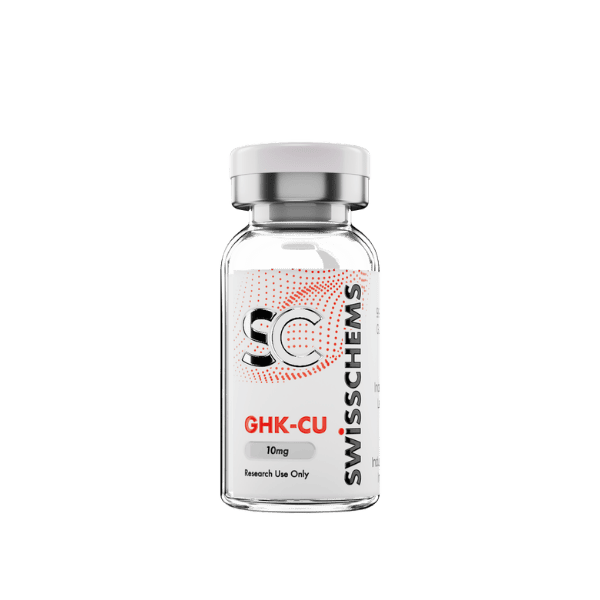
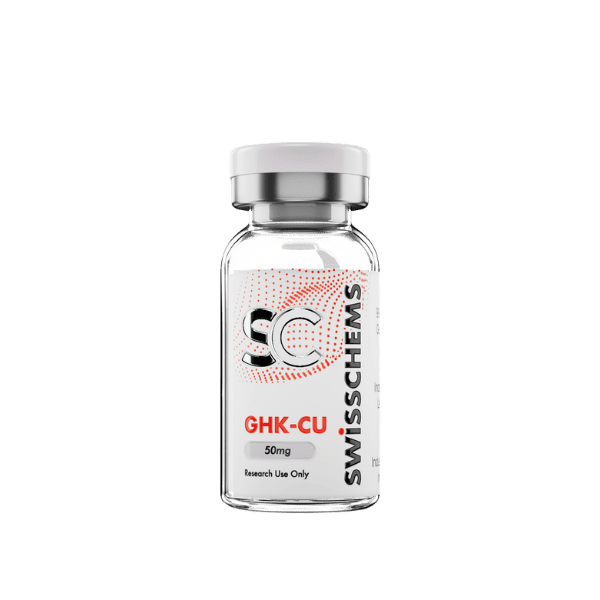
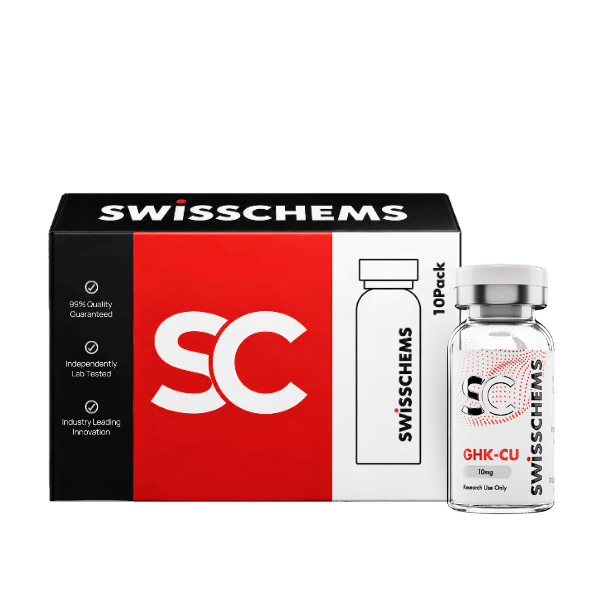
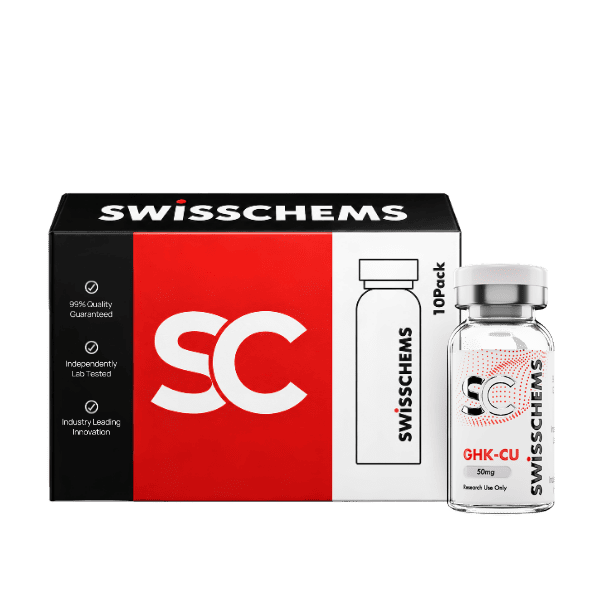
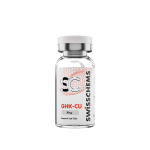
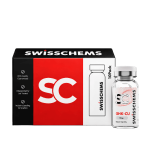
GHK-Cu Copper Peptide
Price range: $24.70 through $689.50
GHK-Cu is a synthetic tripeptide-copper complex demonstrating specific molecular interactions in experimental models. The compound consists of glycyl-L-histidyl-L-lysine sequence chelated with copper, showing unique binding properties in laboratory studies. Research indicates selective cellular pathway modulation in… CAS: 89030-95-5 | Formula: C14H23CuN6O4+ | Content: 50 mg per vial | Research use only | Third-party lab tested.
Buy GHK-Cu Copper Peptide – Swiss Chems USA
GHK-Cu Copper Peptide — Research Overview
GHK-Cu is a synthetic tripeptide-copper complex demonstrating specific molecular interactions in experimental models. The compound consists of glycyl-L-histidyl-L-lysine sequence chelated with copper, showing unique binding properties in laboratory studies. Research indicates selective cellular pathway modulation in controlled experimental conditions.
- High Purity – 99% Purity Guaranteed
- Independently Lab Tested
- Research Grade Quality
- For Laboratory Research Use Only
Intended use: This material is supplied for laboratory and in-vitro research only. It is not a drug, food, or cosmetic and is not intended for human or animal consumption.
GHK-Cu Copper Peptide Chemical Properties
| Property | Specification |
|---|---|
| Chemical Formula | C14H23CuN6O4+ |
| Synonyms | Prezatide copper, Copper peptide, BCP32687, SY253680, GHK copper; CG-copper peptide; [N2-(N-Glycyl-L-histidyl)-L-lysinato(2-)]copper |
| Molar Mass | 402.92 g/mol |
| CAS Number | 89030-95-5 |
| PubChem CID | 78122578 |
| Total Compound Content | 50 mg per vial |
| Shelf Life | 36 months |
GHK-Cu Copper Peptide Research Applications
GHK-Cu is a tripeptide-copper(II) complex composed of Glycine-Histidine-Lysine coordinated to a copper ion through high-affinity metal-binding interactions. The copper(II) ion is chelated primarily through the histidine imidazole group and N-terminal amine, forming a stable coordination complex that has been extensively studied in metallopeptide research. This metal-binding architecture contributes to the compound’s utility as a model system for investigating peptide-copper interactions, coordination chemistry, and copper-dependent signaling processes. Experimental investigations have examined the relationship between GHK-Cu and signaling pathways associated with extracellular matrix regulation, structural protein organization, metal-ion transport systems, and peptide-mediated cellular communication networks. Additional studies have characterized interactions with copper-dependent regulatory proteins, redox-associated signaling pathways, and metalloprotein activity, contributing to a broader understanding of peptide-metal complex biology. Research applications include metallopeptide pharmacology, copper coordination studies, ligand-metal interaction analysis, structure-function investigations, extracellular matrix-associated signaling research, and mechanistic evaluation of peptide-copper regulatory systems. Independently third-party HPLC-tested; COA available per batch.
GHK-Cu Copper Peptide Lab Results & Certificates of Analysis
Third-party analytical reports associated with this research compound:
GHK-Cu Copper Peptide Frequently Asked Questions
What role does the copper(II) ion play in the structure of GHK-Cu?
The copper(II) ion is an essential structural component of GHK-Cu, forming a stable coordination complex through interactions with the Gly-His-Lys tripeptide. This metal-binding arrangement influences the physicochemical properties of the complex and has made GHK-Cu a widely studied model system for investigating copper coordination chemistry, ligand-metal interactions, metallopeptide stability, and copper-dependent signaling mechanisms.
What signaling pathways have been associated with GHK-Cu in experimental investigations?
Research involving GHK-Cu has examined interactions with signaling networks associated with extracellular matrix regulation, structural protein organization, metal-ion transport processes, and peptide-mediated cellular communication. Additional investigations have explored relationships between GHK-Cu and copper-dependent regulatory proteins, redox-associated signaling pathways, and metalloprotein activity, contributing to a broader understanding of metallopeptide signaling systems.
What distinguishes GHK-Cu from other copper-binding peptide complexes?
GHK-Cu combines a well-characterized tripeptide scaffold with high-affinity copper(II) coordination, resulting in a defined metallopeptide structure that has been extensively investigated in coordination chemistry and signaling research. Its established molecular architecture and documented metal-binding properties have made it a valuable reference compound for studies examining ligand-metal interactions, metallopeptide pharmacology, structure-function relationships, and copper-dependent regulatory mechanisms.
Research Use Disclaimer
All product information is provided for educational and laboratory research reference only. Any form of introduction into humans or animals is prohibited. Handle only in licensed research settings in accordance with applicable laws and institutional protocols.
| Weight | 3 lbs |
|---|---|
| Ghk Cu Copper Peptide |
10mg 1 vial ,10mg KIT (10 vials) ,50mg (1 vial) ,50mg KIT (10 vials) |
Reviews
There are no reviews yet.