
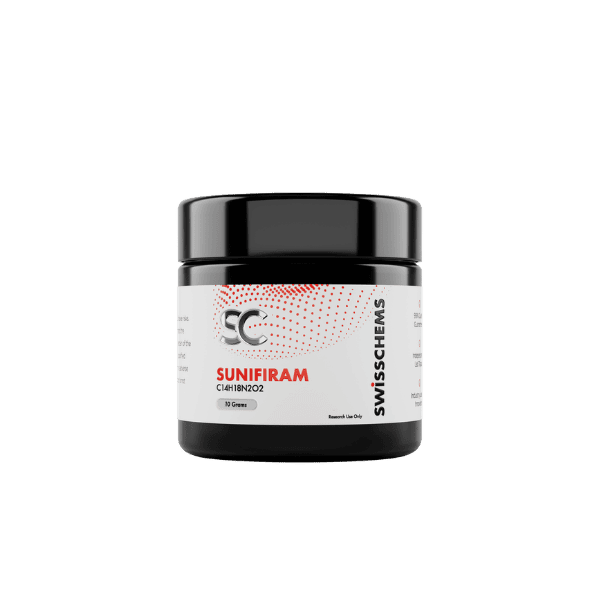
Sunifiram – powder, 10 grams
$34.99
Sunifiram (DM-235) is a synthetic pyrrolidinone-derived compound structurally distinct from the classical racetam family despite sharing a related core scaffold, investigated for proposed positive allosteric modulation of AMPA-type glutamate receptors. Research interest centers on its reported high in vitro potency… CAS: 314728-85-3 | Formula: C14H18N2O2 | Content: 10 grams | Research use only | Third-party lab tested.
Buy Sunifiram – powder, 10 grams – Swiss Chems USA
Sunifiram – powder, 10 grams — Research Overview
Sunifiram (DM-235) is a synthetic pyrrolidinone-derived compound structurally distinct from the classical racetam family despite sharing a related core scaffold, investigated for proposed positive allosteric modulation of AMPA-type glutamate receptors. Research interest centers on its reported high in vitro potency relative to piracetam-class compounds at substantially lower concentrations. Research applications include AMPA receptor potentiator pharmacology, glutamatergic signalling research, and structure-activity comparison within the pyrrolidinone-derivative compound series.
- High Purity – 99% Purity Guaranteed
- Independently Lab Tested
- Research Grade Quality
- For Laboratory Research Use Only
Intended use: This material is supplied for laboratory and in-vitro research only. It is not a drug, food, or cosmetic and is not intended for human or animal consumption.
Sunifiram – powder, 10 grams Chemical Properties
| Property | Specification |
|---|---|
| Chemical Formula | C14H18N2O2 |
| Synonyms | DM-235 |
| Molar Mass | 246.304 g/mol |
| CAS Number | 314728-85-3 |
| PubChem CID | 4223812 |
| Total Compound Content | 10 grams |
| Shelf Life | 36 months |
Sunifiram – powder, 10 grams Research Applications
Sunifiram is studied as a positive allosteric modulator candidate at AMPA-type ionotropic glutamate receptors, a mechanism investigated using patch-clamp electrophysiology to characterise changes in AMPA receptor-mediated current amplitude and desensitization kinetics in the presence of the compound. Comparative potency studies position sunifiram within structure-activity relationship research examining how its specific pyrrolidinone-derived substituent pattern relates to reported nanomolar-range activity, in contrast to the typically higher concentrations required for classical racetam-family compounds in similar assay systems. Independently third-party HPLC-tested; COA available per batch.
Sunifiram – powder, 10 grams Frequently Asked Questions
How does sunifiram’s structure relate to and differ from the classical racetam compound family?
Sunifiram shares a pyrrolidinone-derived structural lineage conceptually related to the racetam family but is synthesized via a distinct chemical route and carries substituents not present in piracetam, oxiracetam, or other classical racetam-family compounds. This structural distinction is the basis for research comparing sunifiram’s receptor-binding and functional potency profile against established racetam compounds, particularly given reports of substantially different potency ranges between the two groups in similar assay systems.
What electrophysiological methods characterize sunifiram’s proposed AMPA receptor potentiating activity?
Patch-clamp electrophysiology in cultured neurons, brain slice preparations, or heterologous expression systems is the standard method for characterising sunifiram’s effects on AMPA receptor-mediated currents, with key readouts including peak current amplitude, desensitization rate, and deactivation kinetics in the presence versus absence of the compound. These functional measurements are used alongside receptor-binding assays to determine whether sunifiram acts at an allosteric site distinct from the glutamate orthosteric binding site, consistent with a positive allosteric modulator mechanism.
What concentration ranges are typically used in research characterizing sunifiram’s in vitro potency?
Reports of sunifiram’s in vitro activity describe substantially lower effective concentrations than those required for classical racetam-family compounds in comparable assay systems, prompting researchers to use nanomolar-to-low-micromolar concentration ranges when establishing dose-response curves for sunifiram, in contrast to the micromolar-to-millimolar ranges typically required for piracetam-class compounds. Researchers should empirically establish the relevant concentration range for their specific assay system and cell model rather than assuming direct potency transfer from other reported studies.
Research Use Disclaimer
All product information is provided for educational and laboratory research reference only. Any form of introduction into humans or animals is prohibited. Handle only in licensed research settings in accordance with applicable laws and institutional protocols.
| Weight | 0.35 lbs |
|---|
Related products
Reviews
There are no reviews yet.