
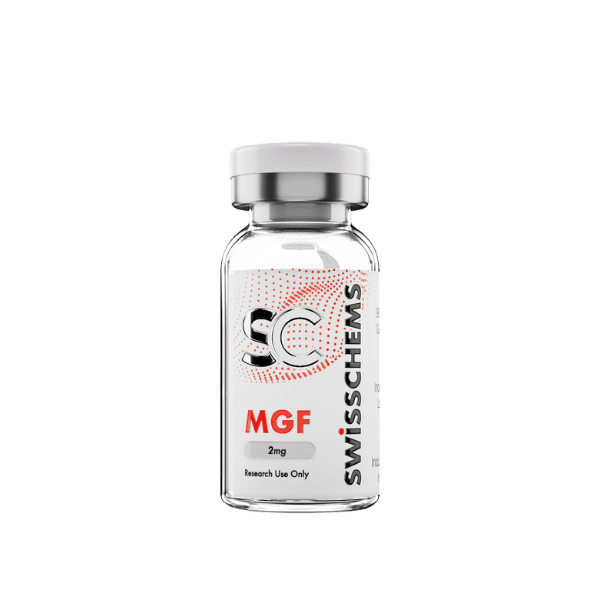
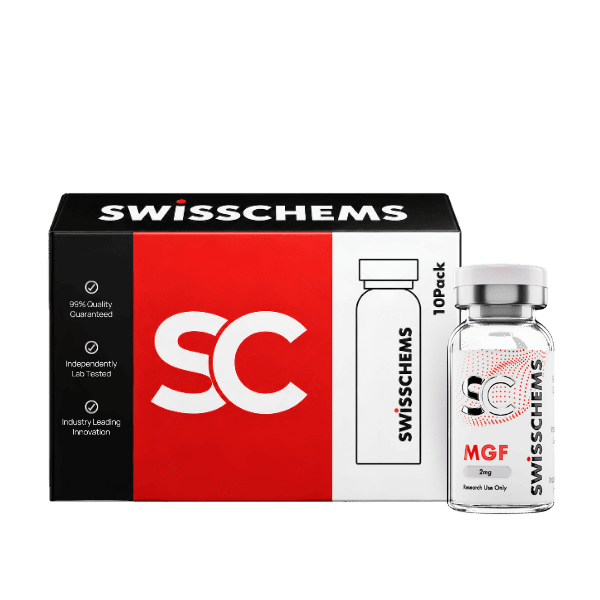

MGF without PEG 2mg
Price range: $29.99 through $299.90
Mechano Growth Factor (MGF) is the alternative splice variant of the insulin-like growth factor 1 (IGF-1) gene, also designated IGF-1Ec, distinguished from the systemic IGF-1Ea isoform by a distinct C-terminal E-domain peptide sequence. Research interest centers on its proposed role in activating satellite cell… CAS: 1565841-06-6 | Formula: C121H200N42O39 | Content: 2mg per vial | Research use only | Third-party lab tested.
Buy MGF without PEG 2mg – Swiss Chems USA
MGF without PEG 2mg — Research Overview
Mechano Growth Factor (MGF) is the alternative splice variant of the insulin-like growth factor 1 (IGF-1) gene, also designated IGF-1Ec, distinguished from the systemic IGF-1Ea isoform by a distinct C-terminal E-domain peptide sequence. Research interest centers on its proposed role in activating satellite cell proliferation in skeletal muscle tissue following mechanical loading, distinct from the growth-promoting signalling of mature IGF-1. Research applications include satellite cell activation pathway studies, IGF-1 splice variant comparative research, and muscle tissue mechanotransduction investigation.
- High Purity – 99% Purity Guaranteed
- Independently Lab Tested
- Research Grade Quality
- For Laboratory Research Use Only
Intended use: This material is supplied for laboratory and in-vitro research only. It is not a drug, food, or cosmetic and is not intended for human or animal consumption.
MGF without PEG 2mg Chemical Properties
| Property | Specification |
|---|---|
| Chemical Formula | C121H200N42O39 |
| Synonyms | MGF, IGF-1Ec |
| Molar Mass | 2,644.85 g/mol |
| CAS Number | 1565841-06-6 |
| Total Compound Content | 2mg per vial |
| Shelf Life | 36 months |
MGF without PEG 2mg Research Applications
MGF is produced via alternative splicing of the IGF-1 gene specifically in response to mechanical loading or damage in skeletal muscle tissue, generating a peptide with a distinct C-terminal E-domain not present in the systemically circulating mature IGF-1 (IGF-1Ea) isoform. Research models investigate MGF’s reported capacity to activate quiescent satellite cells (muscle-resident stem cells) and promote their entry into the cell cycle, a function studied as distinct from and potentially complementary to mature IGF-1’s role in promoting differentiated myoblast protein synthesis via the PI3K/Akt/mTOR pathway. The unmodified (non-PEGylated) form is used in research protocols requiring native peptide pharmacokinetics rather than the extended half-life conferred by PEGylation. Independently third-party HPLC-tested; COA available per batch.
MGF without PEG 2mg Frequently Asked Questions
How does MGF (IGF-1Ec) functionally differ from mature IGF-1 (IGF-1Ea) in muscle tissue research models?
Both are products of the same IGF-1 gene but result from alternative splicing, producing distinct C-terminal E-domain peptide sequences with reportedly distinct biological roles. Mature IGF-1 (IGF-1Ea) primarily promotes protein synthesis and hypertrophy in already-differentiated myoblasts via PI3K/Akt/mTOR signalling. MGF (IGF-1Ec) is studied for a proposed earlier-stage role: activating quiescent satellite cells to re-enter the cell cycle and begin proliferating, a necessary precursor step before these cells can differentiate and contribute to muscle fiber repair or growth. Research distinguishing these roles typically uses satellite cell proliferation assays (Ki-67, BrdU incorporation) for MGF versus protein synthesis assays (puromycin incorporation, mTOR pathway activation) for mature IGF-1.
What is the significance of using non-PEGylated MGF in pharmacokinetic and mechanistic research?
PEGylation (covalent attachment of polyethylene glycol chains) is a common modification used to extend a peptide’s circulating half-life by reducing renal clearance and proteolytic degradation. Non-PEGylated MGF reflects the native peptide’s pharmacokinetic profile, which is relevant for research questions about the compound’s natural biological half-life and clearance mechanisms, or where the larger PEG moiety might sterically interfere with receptor binding or cellular uptake in a specific experimental model. Researchers should select PEGylated or non-PEGylated formats based on whether their study question concerns native peptide kinetics or extended-exposure pharmacology.
What experimental models are used to study MGF’s proposed satellite cell activation mechanism?
Isolated satellite cell cultures (from skeletal muscle biopsy or whole-muscle explant) and ex vivo muscle fiber preparations are standard models for studying MGF’s effects on satellite cell quiescence exit and proliferation, typically using cell-cycle markers (Ki-67, PCNA) and proliferation assays (BrdU or EdU incorporation) as primary readouts. Mechanical loading or injury models (such as eccentric contraction protocols in ex vivo muscle preparations) are sometimes used to study endogenous MGF splice variant induction alongside exogenous MGF administration, allowing comparison of native versus exogenous peptide effects on the same satellite cell population.
Research Use Disclaimer
All product information is provided for educational and laboratory research reference only. Any form of introduction into humans or animals is prohibited. Handle only in licensed research settings in accordance with applicable laws and institutional protocols.
| Weight | 1 lbs |
|---|---|
| Mgf Without Peg 2 Mg |
KIT (10 vials) ,Vial |
Related products
CJC-1295 with DAC, 2mg
Price range: $47.95 through $479.50
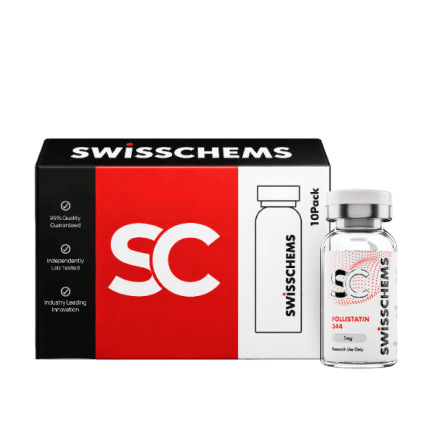
Follistatin-344 1mg
Price range: $139.99 through $1,399.90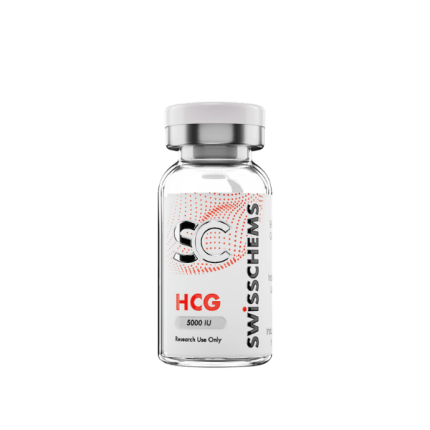
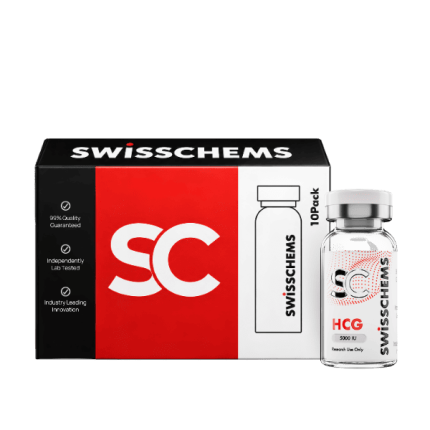
HCG 5000 IU
Price range: $28.99 through $289.90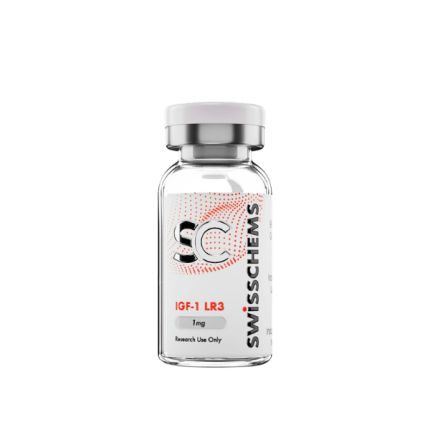
IGF-1 LR3 1mg
Price range: $59.96 through $599.60
Ipamorelin 2mg
Price range: $17.56 through $175.60
Reviews
There are no reviews yet.